AI Server Investment: A 1,000,000 TL Mac Studio Fleet
Done Dynamics, together with zsoftrade, invested 1,000,000 TL into two on-premise Mac Studio AI servers — M3 Ultra with 512 GB and M4 Max with 36 GB — to protect customer data and eliminate dependency on foreign AI providers.
 Devrim Tunçer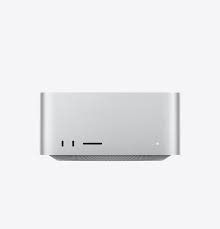
At Done Dynamics, we are announcing our largest infrastructure investment to date: in partnership with zsoftrade, we have built our own on-premise AI fleet of two Mac Studio servers, a total investment of 1,000,000 TL. The goal is direct — protect customer data and bring our reliance on foreign AI providers to zero.
Investment summary
Two Mac Studios, optimized for two different workloads:
| Server | Chip | RAM | Primary workload |
|---|---|---|---|
| Server #1 | Apple M3 Ultra | 512 GB unified memory | Large LLM inference, local fine-tuning, multi-model serving |
| Server #2 | Apple M4 Max | 36 GB unified memory | Low-latency inference, embeddings, RAG pipelines, preprocessing |
Total investment: 1,000,000 TL. Procurement, deployment, and bring-up were carried out together with zsoftrade.
Why our own servers?
Cloud-based AI providers (OpenAI, Anthropic, Google) are excellent for a fast start. But once customer data is involved, three problems show up consistently:
- Data sovereignty. When customer data crosses borders to foreign data centers, KDPL (Turkish KVKK), GDPR, and contractual clauses become a constant negotiation. Keeping the server in our own office removes that whole chain.
- Cost predictability. Per-token billing scales non-linearly with usage. A fixed hardware investment delivers a much more predictable long-term cost curve.
- Vendor lock-in. A foreign provider’s pricing change, model deprecation, or outage hits our customers directly. Local infrastructure brings that risk to zero.
What the M3 Ultra 512 GB enables
The Mac Studio M3 Ultra’s 512 GB unified memory lets us serve very large open-weight models from a single machine. A 70B-parameter model in FP16 needs roughly 140 GB; a 405B-parameter model at 4-bit quantization needs around 200 GB. A single Mac Studio handles this class of models without requiring a GPU cluster.
Concretely:
- Contracted RAG and chatbot workloads run fully on-premise.
- Fine-tuning happens without sensitive data ever leaving the country.
- We can host multiple models concurrently and isolate workloads.
What the M4 Max 36 GB enables
The second server is dedicated to low-latency tasks:
- Embedding generation and vector database queries
- Preprocessing, OCR, language detection, and classification
- High-QPS serving of 7B–13B class models in production traffic
The M4 Max’s single-thread performance gives a measurable speed-up in preprocessing pipelines.
The zsoftrade partnership
This investment is a joint infrastructure project with zsoftrade. Hardware procurement, network topology, backup design, and physical security were planned together. The objective is single and explicit: customer data is processed without leaving the country it lives in.
What changes for customers
The concrete changes for existing and new customers:
- All AI inference is served from on-premise hardware by default.
- We can contractually commit to no cross-border data transfer on more projects.
- Because API costs are converted into fixed hardware costs, package pricing becomes viable.
- Model versions are fully under our control — behavior does not change overnight.
Bottom line
For Done Dynamics, AI is no longer an external service — it is a server sitting inside the building. This 1,000,000 TL investment, executed together with zsoftrade, is the most critical step we have taken for both data security and long-term cost predictability. Every AI project going forward will be built on this fleet.